




Most lists of employee recognition ideas are sorted by nothing at all, which makes them hard to use. The useful question is not “what could we do?” but “what can we do this week, this quarter and this year, with the time and money we actually have?”
So this list is sorted by effort. It starts with things a manager can do today at no cost, moves through ideas that need a little planning, and ends with formal awards. After that come notes for three kinds of workplace where the standard advice does not fit: shift-based sites, remote teams and very small businesses.
What makes recognition work
Whatever the idea, recognition lands when it has three things: it is specific about what the person did, it comes soon after they did it, and it is delivered by someone whose opinion they care about. An expensive gesture that is vague and late does less than a two-sentence note that is neither.
It also helps to know how each person likes to be recognized. Some people enjoy a public moment; others would much rather have a quiet word and a note they can keep. Asking is not awkward. It is the simplest way to avoid getting it wrong.
No cost, same day
- Say it specifically. “Thank you for rewriting that proposal overnight; the client mentioned the pricing table by name” beats “great job.”
- Write a note by hand. People keep them for years.
- Tell their manager, in writing. A message to someone’s boss, with them copied, puts the thanks in front of the person who decides their next step.
- Open the team meeting with it. One named contribution at the start of each meeting becomes a habit.
- Pass on the customer’s words. When praise comes in, forward it to the person and to the team.
- Give them the floor. Ask the person who solved the problem to explain how, so the credit is unmistakably theirs.
- Ask for their view. Being consulted on the next decision is recognition of the last one.
For help with the words themselves, see employee appreciation messages.
Low cost, a little planning
- A recognition board. A wall or a shared channel where anyone can post a thank-you to a colleague.
- A traveling award. One object that sits on a different desk each month, passed on by the previous holder with a reason.
- Team lunch for a finished project. Tied to the project and named as such, not a general perk.
- First pick. Of shifts, of the next project, of the parking space by the door.
- Time back. An early finish or a late start after a hard stretch, where your policies allow it.
- A feature in the newsletter. A short profile of the person and the work, with a photograph.
- Coworker nominations. A simple form anyone can fill in. See peer-to-peer recognition.
- Pins. A small lapel pin for a value, a skill or a milestone, worn on a lanyard or a uniform. See pins.
Planned, recurring recognition
These ideas need a named owner and a calendar, and they are where most of a recognition budget usually goes.
- Employee of the month or quarter. Works when the criteria are written down and the winners come from across the business. See how to run an employee of the month program.
- Service milestones. An award at set anniversaries, given to everyone who reaches them. See years of service awards.
- Safety milestones. Recognition for a crew or a site. See safety milestone awards.
- Project completion awards. A small matching piece for every member of the team that delivered a major project.
- Recognition dates. Employee Appreciation Day and similar dates give a fixed point in the year. See the workplace recognition calendar and Employee Appreciation Day ideas.
- Spot awards. A small stock of awards a manager can give on the day something notable happens, without waiting for a cycle.
Formal awards and the annual event
At the top of the scale is the annual awards presentation: a fixed set of categories, a nomination process, and awards that are made for the occasion and kept for good. This is the recognition people remember longest, and it is the part that most needs to be done properly.
- Choose the categories first. Employee award categories and names lists the options.
- Collect nominations with reasons. The reasons become the presenter’s script and the wording on the award.
- Make the award specific. The person’s name, the award and the reason, not a generic piece with a sticker.
- Plan the handover. Who presents, what they say and who takes the photograph. How to present an award has a structure to follow.
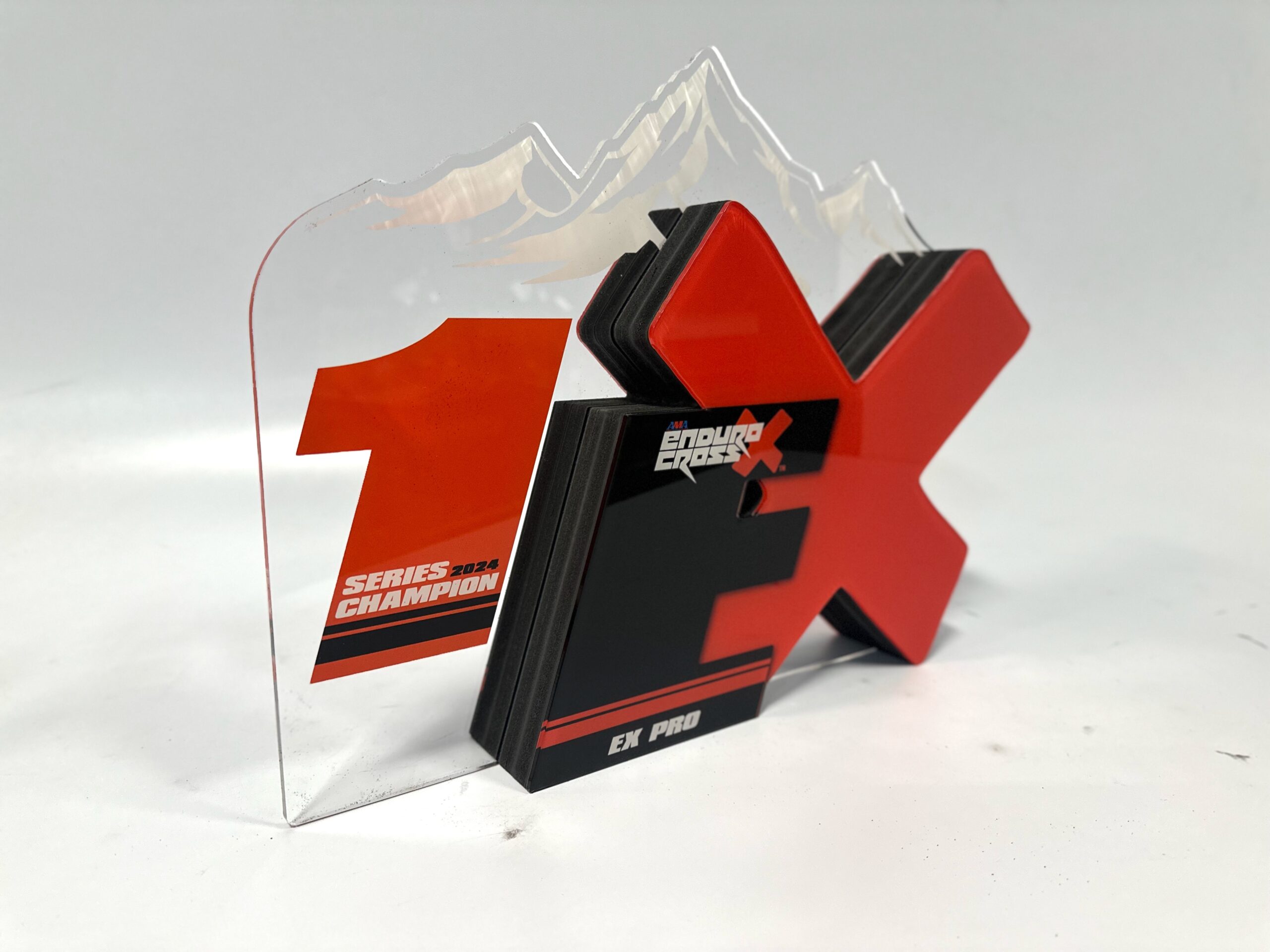
Employee recognition awards shows what we build for these programs. Everything is made in acrylic, wood and metal, there is no minimum order, and you approve a design proof before production.
Ideas for shift-based and frontline sites
Advice written for offices often fails on a production floor, in a warehouse or in a clinic, where people do not sit at a screen and may never see the day shift.
- Recognize on every shift. If the presentation happens at ten in the morning, the night crew has been left out. Repeat it, or rotate it.
- Put it where the work happens. A perpetual plaque by the time clock is seen by everyone; an intranet post is not.
- Use something that can be worn. Pins suit uniforms and lanyards, and they are visible to coworkers every day.
- Recognize crews as crews. Much frontline work is shared, and singling out one person can feel wrong to the team.
- Have supervisors deliver it. Recognition from the person who saw the work carries more weight than a message from head office.
Ideas for remote and hybrid teams
- Say it where the team already talks. A dedicated thank-you channel keeps recognition visible without another meeting.
- Open calls with a named thank-you. The remote version of starting the team meeting with it.
- Send something physical. An object on a desk at home matters more to someone who has no office wall.
- Time the delivery. An award that arrives before the call can be opened on camera.
Awards for remote and hybrid teams covers this in full, including shipping to home addresses.
Ideas for small businesses
A business with eight people does not need a program, a committee or a nomination form. It needs the owner to notice, say so, and mark the big moments properly: a work anniversary, a year-end thank-you, a retirement. One well-made award a year, with a specific reason on it, does more in a small business than a monthly cycle that runs out of new winners by the summer.
Because there is no minimum order, a single award is a normal order for us, not a special request.
Five ways recognition goes wrong
- It is generic. “Thanks for all you do” could be said to anyone, and people know it.
- It is late. Praise in an annual review for something done eleven months earlier has lost most of its value.
- It always goes to the same roles. If only customer-facing people ever win, everyone else stops paying attention.
- It replaces something it should not. Recognition is not a substitute for fair pay or a manageable workload, and people notice when it is used as one.
- It stops. A program that runs for four months and quietly disappears does more harm than never starting. Choose what you can sustain.
To turn a handful of these ideas into something that lasts, see how to build an employee recognition program.
Frequently Asked Questions
What are some free ways to recognize employees?
A specific thank-you in person, a handwritten note, a message to the person’s manager, a named contribution at the start of a team meeting, and passing on customer praise. None costs anything and all can be done the same day.
How often should employees be recognized?
Informal thanks should happen whenever something deserves it. Formal recognition usually runs on a monthly or quarterly cycle, with a larger annual presentation. The right pace is the one you can keep up.
What is the best recognition idea for a small team?
Specific, prompt thanks from the owner or manager, plus one well-made award a year or at major milestones. Small teams rarely need a formal program.
How do you recognize employees who work different shifts?
Present recognition on each shift, display it where the work happens, and have supervisors who saw the work deliver it. Wearable items such as pins suit uniformed roles.
When is a physical award worth it?
When the achievement is significant enough to be remembered: an annual award, a milestone, a retirement or a completed major project. A physical award is the part of recognition that stays on a desk or a wall for years.
Need the awards as well as the plan?
When an idea calls for a real award, send us the names and wording and we will design it and send a proof before anything is produced.
See employee recognition awards


