




Peer-to-peer recognition is recognition that comes from coworkers rather than from a manager. Instead of thanks flowing down the organization chart, anyone can recognize anyone: the person at the next desk, someone in another department, a colleague on a different shift.
It matters because coworkers see things managers do not. They know who stayed to help, who quietly fixed the handover and who explained the new system three times without sighing. This guide covers how peer recognition works in practice, what a good peer nomination looks like, where it goes wrong, and how a physical award fits into it.
What peer recognition adds
- It sees more. A manager with ten people sees a fraction of what those ten people see of one another.
- It reaches the support roles. The people whose work makes others’ results possible are the ones peers notice first and formal awards notice last.
- It is believed. Praise from someone who does the same job, and knows how hard it was, carries a particular weight.
- It spreads the habit. When everyone is able to recognize, noticing good work becomes part of how the team behaves.
It does not replace recognition from managers. People still want to know that the person who decides their pay and their prospects has seen their work. The two work together.
Four formats, from informal to formal
| Format | How it works | Suits |
|---|---|---|
| Thank-you channel or board | Anyone posts a short thank-you naming a colleague and what they did. | Any team; the easiest place to start. |
| Recognition cards | Printed cards on hand for anyone to fill in and give. A copy goes to the manager. | Shift sites and places without desks. |
| Traveling award | One object that the current holder passes on, with a reason, at a team meeting. | Single teams of up to about thirty people. |
| Peers’ choice award | A formal award decided by coworker nominations or a vote, presented monthly, quarterly or annually. | Organizations that already run awards. |
Most organizations that do this well run two of the four: one informal channel that is open all the time, and one formal award that draws on it.
How nominations work
A peer nomination should take a few minutes, or people will not make one. Four questions are enough:
- Who are you recognizing?
- What did they do? Be specific.
- What difference did it make, and to whom?
- Which of our values or award categories does it fit?
Decide in advance who reads the nominations and how a winner is chosen. A small rotating panel that reads the reasons works better than counting the number of nominations, because a count rewards the best-known person rather than the best contribution. Whoever decides, the reasons should be shared with the person being recognized. For many people, reading what a coworker wrote about them means more than the award.
For a formal award with judges, how to write an award nomination goes into more depth, and employee of the month nomination examples has samples by role.
Examples of strong peer nominations
Each of these names an action, a result and the person who benefited. None relies on adjectives.
- Office: “I am nominating Priya in accounts. When our client’s invoice was rejected for the third time, she called their finance team herself, found that their system needed a different reference format, and rebuilt the whole batch that afternoon. We were paid that week and the client has not had a rejection since.”
- Warehouse: “Marcus noticed the new racking labels did not match the pick sheets on his first night with them. He marked up every mismatch and left the list for the day supervisor. Nobody asked him to. It saved the whole day crew from mis-picks.”
- Healthcare: “Elena noticed that a patient’s follow-up had never been booked after a referral. She chased it with the specialist’s office, called the patient herself, then checked the rest of that week’s referrals and found two more. All three were seen.”
- Remote team: “Tom recorded a short walkthrough of the new reporting tool for those of us in other time zones, without being asked, and has answered every question in the thread since. I would have lost most of a morning to it otherwise.”
- Across departments: “I work in sales and I am nominating Chris in production. He called me before a job went out to say the customer’s logo looked wrong, and he was right: they had sent an old version. He saved us a reprint and an awkward conversation.”
Compare those with a weak nomination: “Sam is a great team player who always goes above and beyond.” It may be true, but it gives a panel nothing to weigh and gives Sam nothing to remember.
Pitfalls, and how to avoid them
- The popularity contest. Judge on the reasons given, not on the number of nominations, and do not publish counts.
- Trading. Friends nominating one another in turn. A panel that reads the reasons spots it quickly; so does a rule that the same pair cannot nominate each other in consecutive cycles.
- The invisible roles. Night shift, remote staff and back-office teams are nominated less because fewer people see them. Ask managers of those teams to prompt nominations, and review who has been recognized each quarter.
- Fading out. Peer recognition starts with enthusiasm and thins after a few months. Leaders nominating visibly, and a standing agenda slot to read nominations aloud, keep it alive.
- Tying it to pay. Once money rides on nominations, the nominations change. Keep peer recognition about recognition, and take advice from your HR team before attaching any reward.
Where a physical award fits
Everyday peer recognition does not need an object. A sincere, specific message is the whole point. A physical award earns its place at the formal end, in three ways.
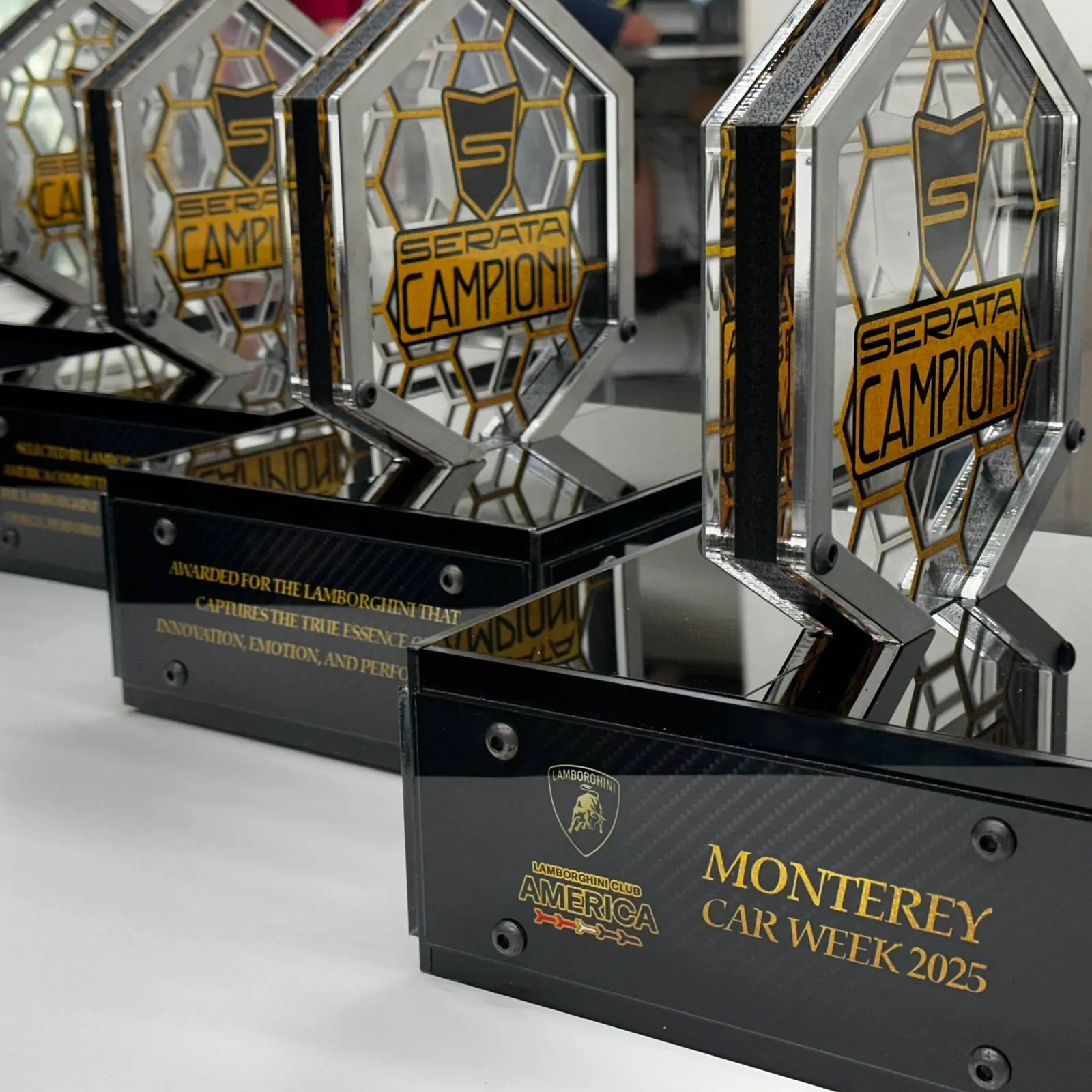
- A traveling award. One piece that moves from desk to desk. It should be sturdy enough to be handled every month and distinctive enough that people know what it is from across the room. A custom-shaped acrylic piece on a solid base does this well; see custom awards.
- A perpetual plaque. A wall plaque naming the award, with a metal name plate added for each period’s winner. It gives the award a visible history. See perpetual trophies.
- A keeper for each winner. A smaller award the person takes home, carrying the reason in their coworkers’ words.
That last point is what sets a peers’ choice award apart. The wording can quote the nomination itself:
Peers’ Choice Award
Marcus Reyes
“He stayed to fix what nobody had asked him to fix.”
Nominated by the night crew · 2026
Employee recognition awards shows what we build for programs like this. There is no minimum order, and you see a design proof before anything is produced. For the wording, see employee award wording.
Starting small
- Open one place for thank-yous: a channel, a board or a box of cards.
- Ask team leaders to post the first few, so that others can see what a good one looks like.
- Read two or three aloud at each team meeting.
- After a quarter, look at who has and has not been recognized, and why.
- Only then decide whether to add a formal peers’ choice award on top.
If you are building a wider program at the same time, how to build an employee recognition program sets out the decisions in order, and employee recognition ideas lists other things to run alongside it.
Frequently Asked Questions
What is peer-to-peer recognition?
Recognition given by coworkers to one another rather than by a manager. It ranges from a thank-you posted on a shared board to a formal peers’ choice award decided by coworker nominations.
What is an example of peer-to-peer recognition?
A coworker writing: “I am nominating Priya. When the client’s invoice kept being rejected, she called their finance team, found the cause and rebuilt the batch that afternoon.” It names the person, the action and the result.
How do you stop peer recognition becoming a popularity contest?
Have a small panel judge the reasons given rather than counting nominations, do not publish counts, and review each quarter whether less visible teams are being recognized.
Does peer recognition need software?
No. A shared channel, a bulletin board or printed cards are enough to start. Dedicated platforms exist, but they are a separate decision; we make awards and do not sell recognition software.
What kind of award suits a peers’ choice program?
A traveling award or a perpetual plaque for the program itself, plus a smaller keeper for each winner with the nomination wording on it.
Need the awards as well as the plan?
Running a peers’ choice award? Send us the award name and how often it is presented, and we will design it and send a proof before anything is produced.
See employee recognition awards


