




Work superlatives borrow the format of a school yearbook: “Most likely to…” followed by something everyone in the room recognizes as true. They are quick to write, cost nothing to invent, and they work at a holiday party, a team offsite or the lighter half of an annual awards night. The best ones make the person receiving them laugh first.
The list below has eighty, grouped by theme, all written so that the thing being pointed out is something a person would be glad to be known for. After the list are the rules that keep superlatives kind, ways to choose who gets which, and how to present them so they are more than a slide.
What makes a good work superlative
A good superlative is specific, affectionate and true. It names a habit or a strength the whole team has noticed, and it would still be funny if the person’s family were in the room. “Most likely to have already read the whole document” works because it is a compliment in disguise. A superlative that points at a weakness, even gently, lands very differently when it is read aloud in front of colleagues.
Superlatives are also different from funny award titles. A title is a name, such as a made-up job or a mock trophy, and we have a separate list of a hundred of those in funny award ideas. A superlative is a prediction, which makes it easier to tailor to one person. Many teams use both: titles for the awards themselves and superlatives for a vote.
Helpful and dependable
- Most likely to drop everything to help
- Most likely to have a spare charger
- Most likely to remember what was decided last time
- Most likely to stay until the job is done right
- Most likely to notice when someone is having a hard day
- Most likely to answer the question nobody else could
- Most likely to cover a shift without being asked twice
- Most likely to have a backup plan, and a backup for the backup
- Most likely to welcome the new person first
- Most likely to find the thing everyone else gave up looking for
- Most likely to say “I can take that” in a meeting
- Most likely to explain it patiently a third time
- Most likely to be thanked in someone else’s speech
- Most likely to keep the whole project on track without anyone noticing
Skills and smarts
- Most likely to have already read the whole document
- Most likely to spot the typo on the final proof
- Most likely to fix it before anyone knew it was broken
- Most likely to build a formula for it
- Most likely to ask the question that changes the plan
- Most likely to know the shortcut key
- Most likely to turn a rough idea into a finished plan
- Most likely to remember a customer’s order from years ago
- Most likely to explain something complicated on a napkin
- Most likely to run the company one day
- Most likely to write the manual everyone ends up using
- Most likely to solve it while everyone else is still describing the problem
- Most likely to have a color-coded system
- Most likely to teach the rest of us something new this year
Energy and attitude
- Most likely to brighten a Monday
- Most likely to start the applause
- Most likely to turn a setback into a plan
- Most likely to say “we can figure this out”
- Most likely to be smiling at the end of a long shift
- Most likely to celebrate someone else’s win
- Most likely to volunteer first
- Most likely to keep calm when the system goes down
- Most likely to make a stranger feel like a regular
- Most likely to bring the team together
- Most likely to find the good news in the report
- Most likely to send a thank-you note
- Most likely to make a long meeting feel short
Office life
- Most likely to bring in baked goods
- Most likely to have the best desk decorations
- Most likely to know where the good pens are
- Most likely to organize the potluck
- Most likely to start the group lunch order
- Most likely to win the office trivia night
- Most likely to have a snack drawer worth visiting
- Most likely to know every coworker’s coffee order
- Most likely to decorate for every holiday
- Most likely to recommend a great book
- Most likely to have a story for every occasion
- Most likely to get everyone into the team photo
- Most likely to quote a movie in a meeting
Remote and hybrid teams
- Most likely to have the best lighting on a call
- Most likely to post the perfect reaction
- Most likely to remember to hit record
- Most likely to have a guest appearance from a cat
- Most likely to keep the chat lively
- Most likely to share a useful link at exactly the right moment
- Most likely to be working from somewhere scenic
- Most likely to wave goodbye at the end of every call
- Most likely to have the tidiest shared folder
- Most likely to start a call with a good question
- Most likely to make a new hire feel included from three states away
- Most likely to write notes the whole team relies on
Presenting awards to people who are not in the room takes a little more planning. Awards for remote and hybrid teams covers shipping to home addresses and rebuilding the moment on a call.
Sales, service and the shop floor
- Most likely to turn a complaint into a compliment
- Most likely to remember a customer’s name and their dog’s name
- Most likely to follow up when they said they would
- Most likely to find a way to say yes
- Most likely to know the product better than the brochure
- Most likely to be asked for by name
- Most likely to keep the line moving
- Most likely to have the cleanest workstation
- Most likely to catch a problem before it ships
- Most likely to train the next generation
- Most likely to know every machine by its sound
- Most likely to close the deal with a handshake
- Most likely to go the extra mile for a delivery
- Most likely to leave the place better than they found it
Six rules that keep superlatives kind
- Stay away from personal subjects. Nothing about appearance, age, health, weight, money, relationships or family circumstances.
- Do not disguise a complaint as a joke. Timekeeping, messiness, talkativeness and inbox habits are the usual offenders. If it is a real performance issue, it belongs in a private conversation, not on an award.
- Point at a strength. Every item on the list above is something a person would be happy to hear said about them in front of their manager.
- Include everyone or keep it to a few. A team of twelve where eleven people receive one is worse than no superlatives at all.
- Check with the person if you are unsure. A quick word beforehand costs nothing and avoids the one that goes wrong.
- Have someone outside the group read the list. In-jokes can read very differently to a newer colleague or to a guest. When in doubt, check with your HR team.
How to choose who gets which
There are two common methods. In the first, a small committee writes one superlative for each person, which makes sure nobody is left out and lets every line be tailored. In the second, the team votes: a short form lists the superlatives and everyone writes in a name for each. Voting is more fun and more of an event, but it can leave quieter people without one, so most organizers who use a vote keep a few unassigned superlatives in reserve and write them for anyone the vote missed.
If the superlatives sit alongside serious recognition, keep the two clearly separate in the running order. Employee award categories and names lists the formal categories, and peer-to-peer recognition covers how coworker nominations work when the award is a real one.
How to present them
Read each superlative first and pause before the name. That pause is where the room guesses, and it is most of the fun. Keep the whole segment brisk: a line, a name, a handshake and a photograph, then the next one.
- Certificates or cards: fine for a casual lunch, and easy to print in-house.
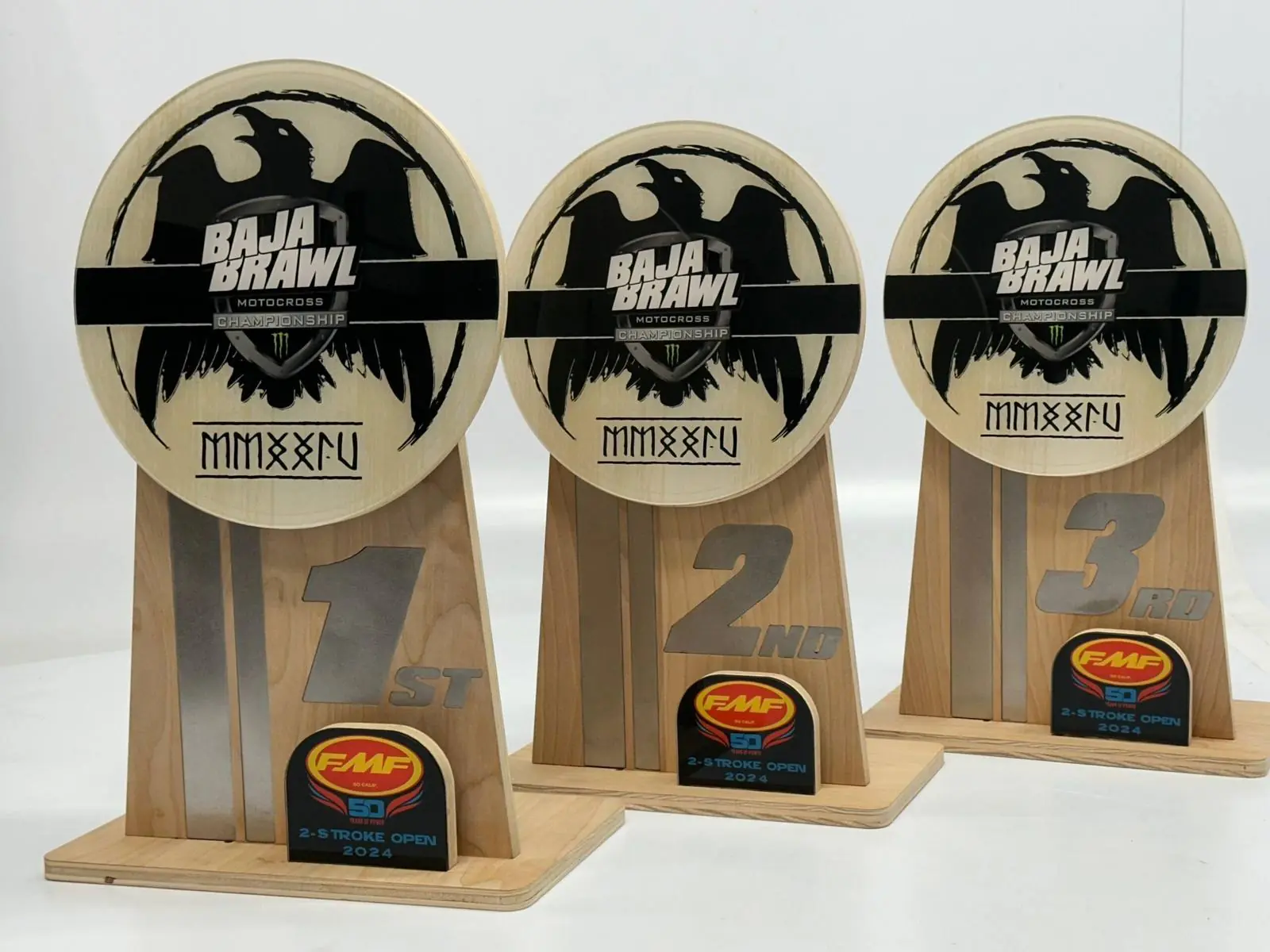
- A matching set of small awards: one shape for the whole team with each person’s superlative and name on their own piece. Semi-custom awards suit this, because the body repeats and only the artwork changes.
- Medallions or pins: light, easy to hand out to a large group, and people do wear them for the rest of the party. See medallion awards and pins.
- One perpetual: a single traveling award for the superlative the team cares about most, with a new name plate each year. See perpetual trophies.
A physical award is what turns a superlative into something kept on a desk. We build in acrylic, wood and metal, there is no minimum order, and every piece is laid out on a design proof first. Corporate awards shows how we work with companies.
Frequently Asked Questions
What are work superlatives?
Light-hearted awards in the “most likely to” format, given to coworkers for habits and strengths the whole team recognizes. They are usually presented at a party, an offsite or the informal part of an awards night.
How do you keep work superlatives appropriate?
Point at strengths rather than weaknesses, avoid anything about appearance, age, health, money or family, and have someone outside the group read the list before it is presented. If you are unsure about one, ask the person first.
Should the team vote on superlatives?
Voting makes it more of an event, but it can leave some people without one. Keep a few spare superlatives and write them for anyone the vote misses, so everyone on the team is included.
What is the difference between superlatives and funny awards?
A superlative is a prediction that begins “most likely to.” A funny award is a made-up title. Both work at the same event, and many teams use titles for the awards and superlatives for the vote.
Can superlatives be put on real awards?
Yes. A matching set with each person’s superlative and name is a common order. There is no minimum, and we send a design proof for approval before anything is produced.
Planning a recognition program?
Send us your list of superlatives and names, and we will lay them out as a matching set of awards and send a proof before anything is produced.
See corporate awards


