




Ultra4 is the rare form of racing where finishing is genuinely an achievement. A course that runs rocks into desert into short course, over a distance long enough that a large part of the field will not see the end of it, and a result sheet where DNF is the most common entry.
An awards programme built only around a podium therefore misses most of the story. Seven ideas that come out of how these races actually finish — late, dusty, with a lot of broken cars and a lot of people who deserve something.
1. The finisher award, treated as a real award
On a course with this much attrition, crossing the line is the thing most competitors are actually racing for, and a token handed over from a cardboard box does not recognise it.
A proper finisher award — the same design family as the podium pieces, at a smaller scale, with the year and the race name on it — turns a survival story into an object. It is also the highest-volume item in the programme, which means it is the one where a single design and a printed plate saves the most.
Promoters who do this well usually report the same thing: the finisher award is what people photograph, because far more people have one.
2. One family across 4400, 4500, 4600 and 4800
The class structure is genuinely different cars — unlimited, modified, stock, legends — but they ran the same course on the same day, and the awards should say so.
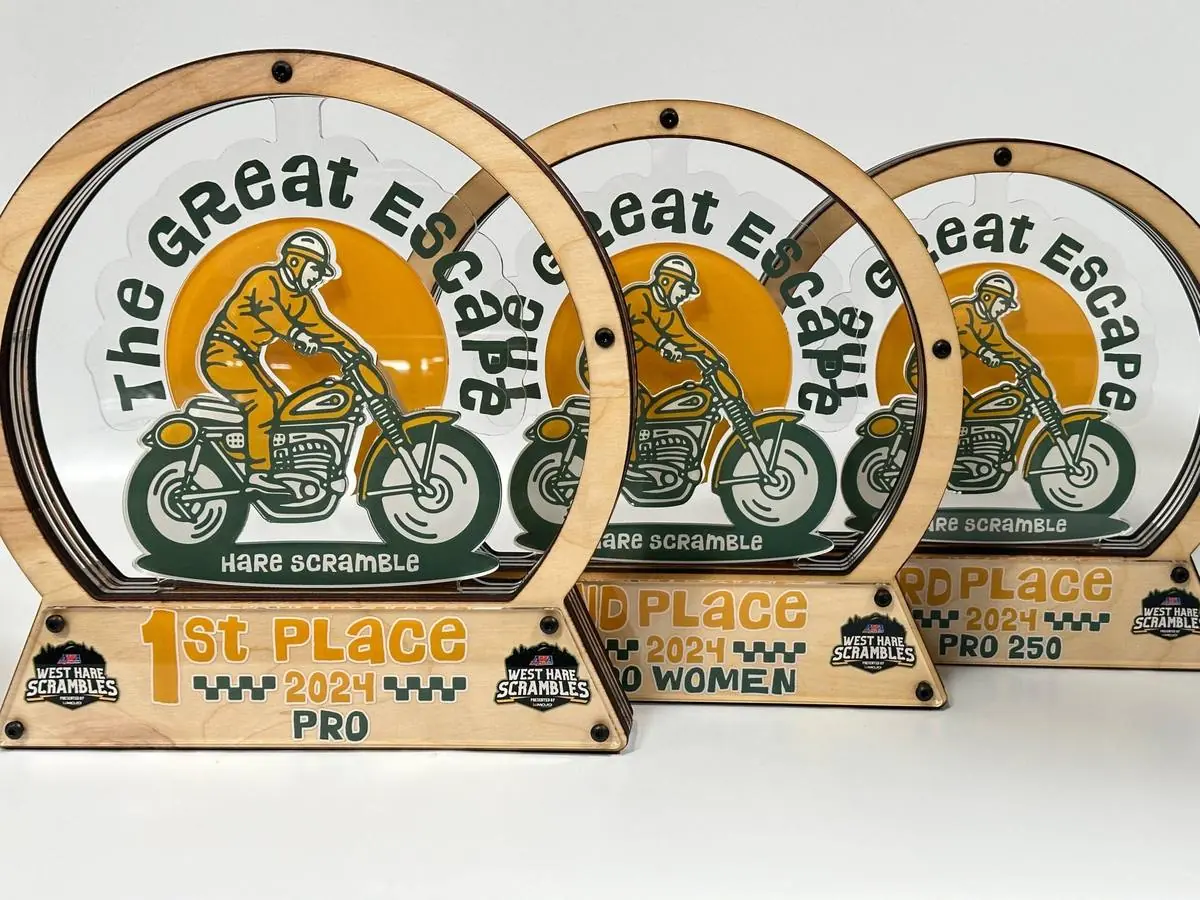
Design one award and put the class and placing on a separate plate. Four classes deep across three places plus finishers is a large order that stays a single artwork approval, and on the presentation table it reads as one race rather than four events sharing a venue.
3. The co-driver gets their own
Nobody finishes one of these alone. The co-driver navigates, spots, works the winch, and does a substantial share of the repairs at the side of the trail. Handing one trophy to a two-person crew and letting them work out who keeps it is a small insult that gets remembered.
Two awards on the same design, both named, costs a fraction more than one and settles the question. It is the single most appreciated change a promoter can make to an existing programme.
4. The named sections, cut into the award
Ultra4 courses are made of obstacles with names, and those names carry more meaning to the people who ran them than the finishing position does. A section that ended half the field's day is a story every competitor at that race shares.
Cutting the profile of a named section into the award — or naming it on the plate — anchors the trophy to that specific race in a way a generic rock graphic never will. It also gives next year's award an obvious reason to look different.
5. A perpetual the series hands back
One substantial award, name plates added each year, returned before the next running. For a race with history, this is the cheapest way to make that history visible — the plates cost very little and the object accumulates something no single-year trophy can.
Build it with more blank plates than you think you need. A perpetual that runs out of room in year four has to be replaced, and a replacement perpetual is not the same object.
6. Hard luck, and the repair that should not have worked
The field repair is a core part of this culture — a car welded back together on the trail and driven to the finish is the story that gets told all year. It costs the same as any other award and it is the one people are most surprised to receive.
Hard luck, best repair, furthest-from-the-finish-still-trying. These are stories rather than results, which is exactly why sponsors attach to them most naturally.
7. The chase crews and the volunteers on the course
Ultra4 races run across terrain that needs people stationed on it all day, plus chase crews who spend the race driving to the places where things go wrong. None of them are in the results.
A small run of awards on the same family, handed out at the same presentation, is what keeps those people volunteering for the next running. It is also the least expensive part of the order.
Putting it together for a race
One design family, the class on a plate, a real finisher award, a co-driver piece for every crew and a handful of specials for the repairs and the volunteers. That is the whole story of the race, and it is one artwork approval.
Send the class structure and an estimate of the finisher count early. Finishers are the volume item, and they are the thing most likely to be underestimated.
Frequently Asked Questions
How many finisher awards should we order if we do not know who will finish?
Work from the historical finish rate for your course rather than the entry list, and round up. Spare finisher awards keep perfectly well for the next running because the design carries the race name and the year sits on a plate.
Is a co-driver award just a second copy of the driver's?
It can be, and for most crews that is exactly right. The names differ and the role can sit on the plate. What matters is that two people who finished together both leave with something.
Can awards survive being handed over at a dusty finish line?
Yes. Printed acrylic and wood builds are handled at the finish, loaded into a truck and driven home over the same terrain the race ran on. Nothing here is a display-cabinet-only object.
Ready to design your Ultra4 awards?
Send us your class structure and course notes and we will build a direction that covers the podium, the finishers and the crews behind them.
See Ultra4 trophies


