




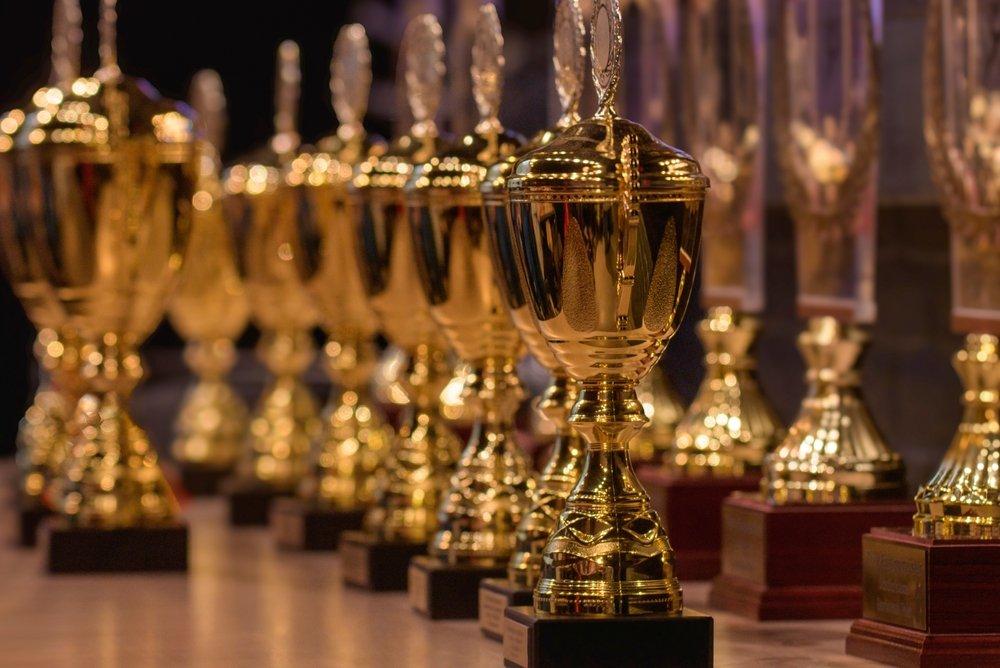
Ordering awards for a large event sounds straightforward—until you’re three weeks out and realize your custom trophies won’t arrive in time. For race promoters, tournament directors, and corporate event coordinators, bulk award ordering is one of those tasks that looks simple on paper but demands careful planning to execute well.
The difference between a smooth awards ceremony and a stressful last-minute scramble usually comes down to one thing: how early you started planning. Production schedules, shipping logistics, quantity estimates, and category structures all need to come together before a single award is manufactured. Get the timing wrong, and you’re either paying rush fees or handing out placeholders instead of trophies.
This guide walks through every stage of bulk award ordering—from setting your production timeline and estimating quantities to managing delivery logistics and planning for spares. Whether you’re coordinating a motocross race, a regional tennis tournament, or an annual employee recognition program, the principles here will help you place a smarter order and avoid the most common planning mistakes.
Quantities are the second decision in the event award planning sequence.
Quantities are settled after the format and material — see all the award buying guides.
Why Bulk Award Ordering Requires Advance Planning
Common Challenges Event Organizers Face When Ordering Awards
Bulk award ordering presents a unique set of logistical challenges that smaller, single-item orders don’t. When you’re ordering trophies for events with hundreds of participants across multiple age groups and categories, every variable multiplies.
Some of the most common issues event organizers run into:
- Underestimating production time. Custom awards aren’t shelf items. They require design approval, material sourcing, fabrication, and finishing before they can ship.
- Miscounting award quantities. Last-minute registration surges, category splits, and ties all create demand for awards beyond the original count.
- Overlooking shipping complexity. A bulk order of trophies or medals isn’t just heavy—it can require freight shipping, special packaging, and longer transit windows.
- Skipping spare awards. Without buffer stock, a single damaged piece or unexpected tie can leave someone empty-handed at the podium.
- Late design approvals. Every day spent waiting on artwork sign-off is a day removed from your production window.
How Early Planning Helps Avoid Production and Shipping Delays
The trophy production timeline for custom awards typically begins the moment artwork is approved—not the moment you place an order. That distinction matters. Design revisions, logo formatting, and proof approvals can add days or even weeks to the front end of the process.
Ordering trophies in advance gives suppliers time to source materials, complete production runs efficiently, and ship without rush surcharges. Event awards planning that starts early also creates room to catch errors before it’s too late to fix them. A name misspelled on a custom medal is easy to correct at the proof stage. After production, it means a replacement order.
When to Start Ordering Awards for an Event
Recommended Production Timelines for Custom Awards
Custom awards turnaround time varies based on the type of award, level of customization, and order volume. As a general benchmark:
- Standard custom medals or pins: 3 to 5 weeks from artwork approval
- Semi-custom trophies with custom inserts or plates: 2 to 4 weeks
- Fully custom sculptural trophies: 6 to 12 weeks, depending on design complexity
- Large volume orders (500+ units): Add 1 to 3 weeks to standard timelines
These are production windows only. Shipping time is additional and depends on your location, order weight, and chosen carrier.
How long custom trophies take depends heavily on how ready your artwork is when you place the order. Suppliers often quote lead times assuming clean, print-ready files. If your logo needs reformatting or your design requires multiple rounds of revisions, that clock doesn’t start until everything is approved.
The safest rule: assume the process takes longer than quoted, and plan accordingly.
Typical Ordering Schedules for Races, Tournaments, and Corporate Events
For most events, here’s a practical ordering timeline to work backward from:
- 10 to 12 weeks before the event: Begin award design and select award types. Explore semi-custom award programs if you need speed without sacrificing personalization.
- 8 weeks before: Finalize quantities and place the order with artwork submitted.
- 6 weeks before: Complete artwork approvals and confirm production start.
- 3 to 4 weeks before: Production complete; awards shipped.
- 1 to 2 weeks before: Awards received, inspected, and staged for the event.
Corporate recognition programs often work on an annual cycle, which makes advance planning easier. Race promoters and tournament directors, however, frequently deal with overlapping event calendars—meaning two or three award orders may be active at once.
Determining the Right Quantity of Awards
How Many Awards Most Competitions Typically Order
The number of trophies for an event depends on your competition structure. A common approach is to award the top three finishers per category, but many events extend recognition further—especially youth competitions and community-based races where participation awards are standard.
A useful starting framework:
- Podium events (1st, 2nd, 3rd): 3 awards per category
- Top-five recognition: 5 awards per category
- Participation awards: 1 per registered competitor
For a motorsports event with 15 classes and podium-only awards, that’s a minimum of 45 trophies before accounting for ties, no-shows, or category additions. Add a 10 to 15 percent buffer to your base count for unexpected situations.
Large-scale races sometimes involve hundreds of competitors across age divisions, skill levels, and vehicle classes. Tournament awards planning at this scale requires a detailed spreadsheet that maps every category to an award count before anything is ordered.
Planning Awards for Multiple Categories and Age Groups
The more granular your award structure, the more planning it requires. Age group divisions—common in running races, cycling events, and youth sports—can dramatically increase your total award count. A 5K race with 10-year age brackets might have eight age groups per gender across multiple distances, resulting in dozens of award categories.
When planning race award categories:
- Build your category list before estimating quantities
- Account for age group cutoffs that may shift with final registration numbers
- Consider whether you’ll award based on registered participants or actual finishers
- Plan for custom medals with category-specific labeling if your event structure demands it
For events with complex age group structures, medallion awards are a popular choice—they’re cost-effective at volume, easy to personalize with category labels, and simple to sort and distribute on event day.
Bulk Order Pricing and Quantity Discounts
How Volume Orders Reduce the Cost Per Award
Bulk trophy pricing follows a straightforward logic: the more units you order, the lower the cost per piece. This is because most of the cost in custom award manufacturing is tied to setup—die creation, artwork preparation, and production line configuration. Once those fixed costs are covered, each additional unit costs significantly less to produce.
Typical volume pricing tiers vary by supplier, but most offer meaningful discounts starting at 50 to 100 units, with more aggressive pricing at 250, 500, and 1,000+ units. Ordering medals for races or tournaments in large quantities often brings the per-unit cost down by 30 to 50 percent compared to small orders.
Bulk award ordering also unlocks better freight rates. Consolidating multiple categories into a single shipment is almost always cheaper than placing several smaller orders at different times.
When Semi-Custom Awards Are Ideal for Large Events
Fully custom awards—designed from scratch with unique sculptures or bespoke shapes—are compelling but come with higher per-unit costs and longer production windows. For high-volume events on tighter budgets or timelines, semi-custom award programs offer a practical middle ground.
Semi-custom awards use standardized bases, shapes, or medal blanks that are personalized with custom artwork, colors, ribbons, or engraving. The setup costs are lower, turnaround times are faster, and per-unit pricing at volume is highly competitive. Many race promoters and tournament directors rely on semi-custom programs as their default ordering approach for annual events.
Shipping Logistics for Large Award Orders
How Weight, Packaging, and Distance Affect Shipping
Shipping trophies for events introduces challenges that standard parcel shipping doesn’t. Trophies are fragile, oddly shaped, and heavy in bulk. A shipment of 300 trophies can easily weigh several hundred pounds, pushing the order into freight territory with different carrier requirements, transit times, and delivery logistics.
Key factors that affect shipping costs and timelines:
- Weight and dimensions: Large trophies in protective packaging add significant volume and weight
- Fragility: Awards with delicate components may need custom crating or foam inserts
- Distance: Domestic ground shipping for heavy freight can take 5 to 10 business days
- Delivery location: Event venues, fairgrounds, and racetracks may not have standard loading dock access
When placing a bulk order, discuss shipping options with your supplier early. Some suppliers offer freight coordination as part of their service; others ship via standard carriers that may not be equipped for large palletized loads.
Planning Delivery Timelines for Event Day
The awards delivery schedule should build in a buffer between receipt and the event. Receiving your awards two days before the ceremony works in theory, but leaves no time to identify damaged pieces, resolve quantity discrepancies, or arrange replacements.
A practical trophy delivery planning approach:
- Schedule delivery at least 7 to 10 days before the event
- Inspect every award upon receipt—check quantities, engraving accuracy, and physical condition
- Sort awards by category immediately so distribution is organized on event day
- Flag any issues with your supplier right away; replacement timelines depend on how early you catch problems
For events held at remote venues or across multiple sites, consider shipping directly to a staging location where you can process and pack awards before transport.
Why Event Organizers Should Order Spare Awards
Common Reasons Spare Trophies Are Needed
Extra trophies for events aren’t a luxury—they’re a practical necessity. Competitions rarely end exactly as planned, and the most common variables are predictable enough to plan for.
Ties: In timed sports, scoring competitions, and head-to-head formats, ties happen. If your podium structure doesn’t account for shared placements, you’re one dead heat away from having nothing to give.
Category changes: Registration numbers sometimes justify splitting a single category into two (e.g., separating age groups or adding a new division after entries close). More categories mean more awards needed beyond the original count.
Damaged awards: Transit damage, handling accidents, and manufacturing defects occasionally show up in bulk orders. Having spares on hand means no one leaves empty-handed while a replacement is sourced.
Last-minute registration additions: Some events allow late entries up to the morning of the competition. If those entrants place, they need awards.
Best Practices for Ordering Backup Awards
The standard recommendation is to order 10 to 15 percent above your estimated need. For a tight budget, even 5 percent extra per major category provides meaningful protection.
For additional race trophies and extra medals for tournaments, align your spare award type with what you’ve already ordered—same design, same engraving style—so spares blend seamlessly with the main award set. If your event uses medallion awards, ordering an additional ribbon of generic medallions is usually inexpensive and easy to store between events.
Store spare awards separately from the main set so they’re easy to access quickly without disrupting your organized distribution staging.
Handling Replacement Awards After an Event
Common Situations That Require Replacement Awards
Even with spare awards on hand, replacement trophies occasionally need to be ordered after the fact. Common situations include:
- Engraving errors: A winner’s name spelled incorrectly, a wrong date, or an inaccurate category label
- Post-event scoring corrections: Results are sometimes revised after an event due to timing errors or eligibility reviews
- Damage during the event: Awards can be dropped, lost, or damaged during the ceremony itself
- Late-submitted names: Some events engrave names after winners are confirmed, and submission delays can push engraving into a post-event timeline
Replacement medals and trophies are a standard part of award supplier operations. The process is usually straightforward, but speed depends on how quickly you can provide the original artwork and specifications.
Keeping Artwork and Design Files for Future Orders
One of the most practical things an event organizer can do is maintain a complete archive of award design files, supplier specs, and order documentation after every event. This makes it possible to reorder trophies, process replacements, and plan the following year’s awards without starting from scratch.
What to save:
- Final approved artwork files (vector format when possible)
- Engraving templates and text specifications
- Supplier order confirmations with item codes and pricing
- Shipping documentation and delivery receipts
For annual events, this archive becomes the foundation for the next order cycle. Repeat award orders are faster, cheaper, and less prone to error when the groundwork is already done. If your event uses event lapel pins for staff, volunteers, or VIP recognition, maintaining pin artwork files is equally valuable for year-over-year consistency.
Award Planning Strategies for Different Types of Events
Motorsports and Racing Event Award Planning
Motorsports and racing events—from amateur motocross series to regional circuit championships—have some of the most complex award structures of any competition format. A single race day might include multiple vehicle classes, age divisions, pro and amateur categories, and special awards like fastest lap or best-in-show.
A race trophies ordering guide for motorsports should account for:
- Class-by-class breakdowns: Build your trophy count per class, not per event
- Multi-round series: If your event spans multiple race days or weekends, clarify whether awards are given per round or only at the series finale
- Trophy size scaling: Many motorsports events use tiered trophy sizes based on finishing position, which affects packaging, weight, and shipping cost calculations
- Venue logistics: Podium ceremonies at racetracks often happen quickly between heats; awards need to be pre-sorted and staged by class before competition begins
Motocross trophies ordering typically involves tiered sculptural designs that reflect the sport’s culture. Ordering these well in advance is especially important given longer production times for more elaborate pieces.
Corporate Recognition Programs and Large Events
Corporate award planning operates on a different calendar than event-based competitions. Employee recognition programs—annual awards nights, sales achievement ceremonies, service milestone recognition—are often tied to fiscal year cycles, which creates predictable ordering windows.
For corporate events, key planning considerations include:
- Personalization requirements: Employee name, tenure, achievement, and sometimes department or location details need to be engraved accurately
- Confidentiality before announcement: Some organizations don’t want award recipients to know they’ve won before the ceremony, which means award preparation must happen discreetly
- Presentation quality: Corporate audiences typically expect a higher level of finish than competitive sport awards
- Scalability: Large organizations may be ordering awards across multiple departments, locations, or business units simultaneously
For ordering awards for corporate events at scale, custom medals, semi-custom award programs, and event lapel pins each serve different recognition contexts. Medals work well for milestone achievements; semi-custom trophies suit department or team recognition; lapel pins are effective for years-of-service programs where recipients wear the award as an ongoing symbol of tenure.
Build Your Award Order Around Your Event Timeline
The most effective approach to bulk award ordering is to treat it as a logistics project, not an afterthought. Map out your event date, work backward through production and shipping windows, build in review time for artwork approvals, and add buffer stock for the unexpected situations that reliably occur.
Start the planning process earlier than feels necessary. A 10-week lead time that leaves you relaxed and organized is far better than a 4-week scramble with rush fees attached.
If you’re planning an upcoming event and want to explore award options that fit your timeline, quantity, and budget, reviewing semi-custom, medallion, and pin award programs is a good starting point—each category offers different advantages depending on your event type, volume, and customization needs.
Ready To Get Your Event Awards Started?
Elevate your event with FREE Design & Fast Shipping custom acrylic awards & trophies! Order high-quality, custom designed acrylic plate awards plaques and trophies for sports, racing, and more. Fast shipping, affordable prices.
Browse Our Trophies & Awards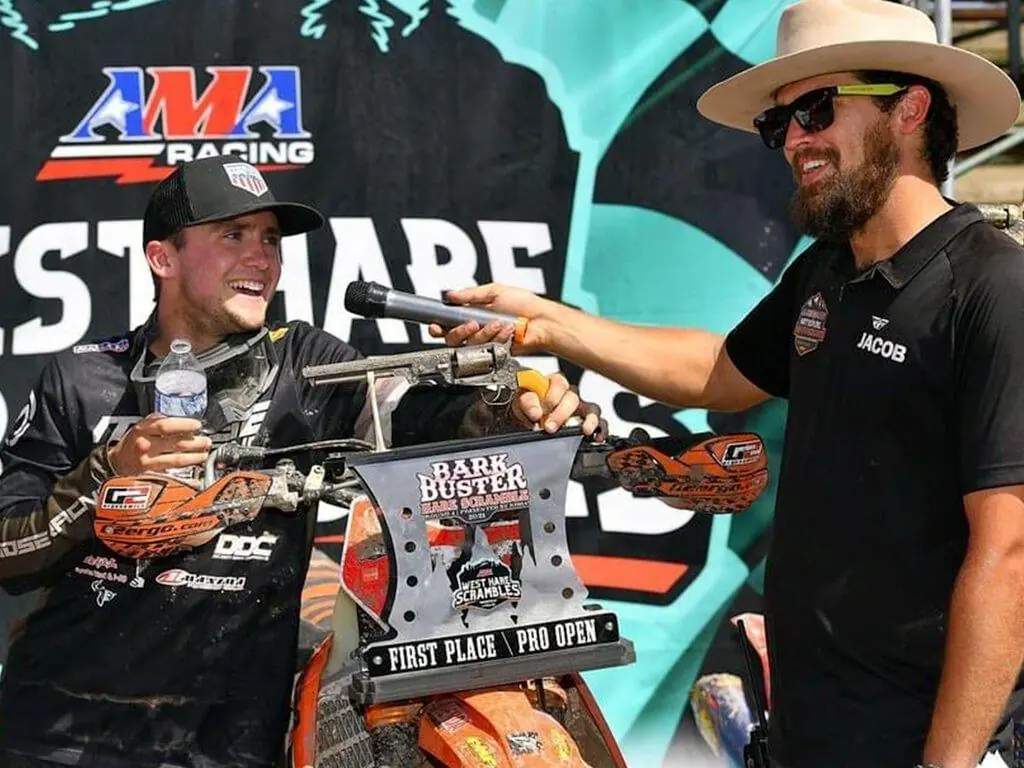
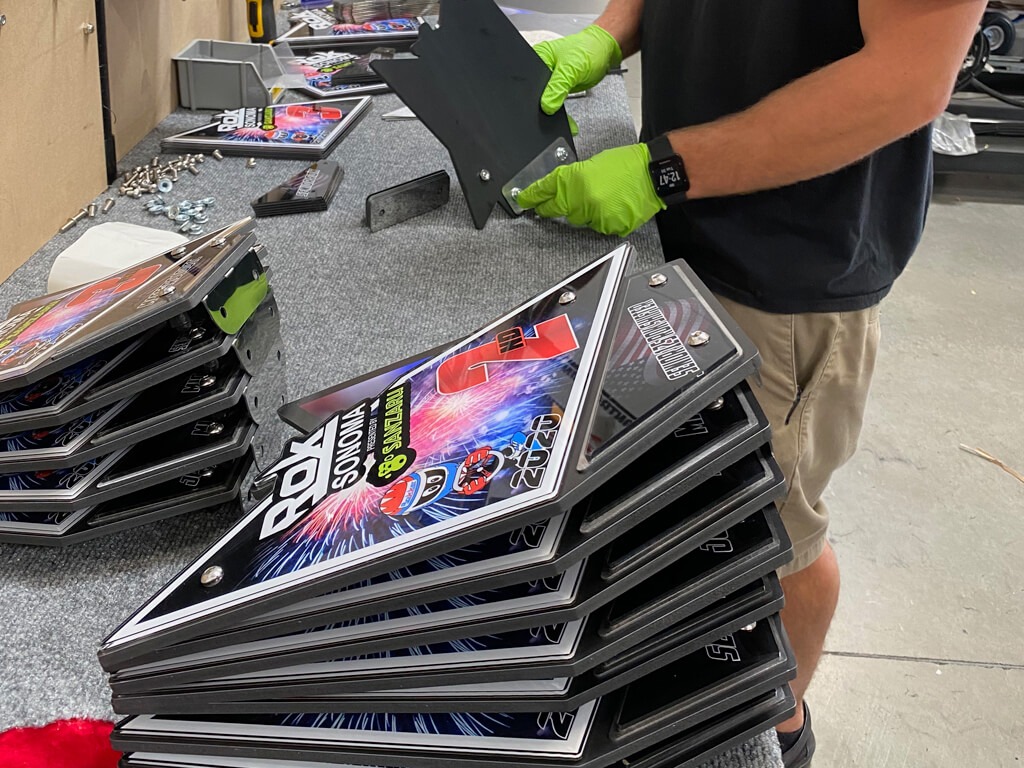
Dash plaques for a full car show field are a common bulk order — see how to plan car show awards for the quantity worksheet.


