Engraving vs UV Printing vs Etching: How Custom Award Graphics Are Created

March 23, 2026

Walk into any awards shop and you’ll see dozens of trophies, plaques, and acrylic pieces—each one decorated differently. Some have crisp, frosted text cut directly into the surface. Others display full-color logos that look almost photographic. A few feature deeply carved designs that catch the light from every angle.

Most buyers never think about how those graphics got there. They submit their artwork, approve a proof, and wait for delivery. But understanding how awards are actually decorated can make a real difference when you’re choosing between options—especially if you care about durability, color accuracy, or how the finished piece will look in five years.

There are four main methods used in custom award production: laser engraving, UV printing, sandblasting, and chemical etching. Each works differently, suits different materials, and produces a distinct visual result. Knowing which method is right for your award type can save you from a result that looks great on-screen but disappoints in person. Choosing the right production method depends on the material and design of the custom awards being produced.

This guide breaks down each decoration method in plain terms, explains when each one is used, and helps you match the right technique to your specific award design.

Why Award Decoration Methods Matter for Quality and Durability

How Text, Logos, and Graphics Are Applied to Modern Awards

Not all award decoration is the same. Some methods physically remove material from the surface, creating a permanent mark that can’t be wiped away. Others apply ink or pigment on top of the surface, which can offer richer color but may wear differently over time depending on the material and finish.

The right method depends on three things: the material the award is made from, the type of artwork being applied, and the intended use of the award. A corporate recognition plaque displayed in a boardroom has different requirements than a racing trophy handed out at an outdoor event.

The Four Most Common Methods Used in Custom Award Production

Laser engraving uses a focused laser beam to vaporize the surface of a material, leaving a permanent recessed mark. Sandblasting directs fine abrasive particles at a surface through a stencil, carving away the exposed areas to create frosted, textured designs. UV printing deposits UV-cured ink directly onto the surface of a material using a flatbed printer, producing full-color graphics with high resolution. Chemical etching uses acid or other chemical compounds to selectively remove metal from a surface, creating highly detailed recessed designs.

Each has its place in modern award manufacturing, and professional shops often use more than one method depending on the order.

Laser Engraving: The Most Common Method for Custom Trophies

How Laser Engraving Works on Acrylic, Metal, and Plaques

Laser engraving works by directing a high-powered laser beam across the surface of a material in a precise pattern. Wherever the beam makes contact, it vaporizes a thin layer of the material—leaving a clean, recessed mark. The depth and contrast of the engraving can be adjusted by changing the laser’s power and speed settings.

Different materials respond to laser engraving in different ways. On acrylic, the laser creates a frosted white appearance against the clear or colored base, which is why engraved acrylic awards have that distinctive frosted text effect. On anodized aluminum and coated metals, the laser removes the surface coating to reveal the material underneath, creating sharp contrast. On wood and bamboo, it burns the surface to create a dark, branded look.

Laser engraving is the trophy engraving process used most widely across the industry because it works reliably on so many materials and requires no consumables beyond the laser itself.

When Laser Engraving Is the Best Choice for Award Personalization

Laser engraving is the preferred choice for awards that need to last. Because the mark is physically cut into the surface rather than applied on top, it cannot fade, peel, or wear away under normal conditions. This makes it ideal for plaques and awards that will be displayed permanently or handled frequently.

It’s particularly well-suited for text-heavy designs—names, dates, event titles, achievement descriptions—where clarity and permanence matter more than color. Corporate recognition awards, academic achievement plaques, and employee milestone awards are all common candidates for laser engraving.

The process is also fast and consistent, which makes it practical for large orders where every piece needs identical quality. Explore engraved plaques for a closer look at how this technique is applied to traditional award formats.

UV Printing: High-Resolution Graphics for Modern Awards

How UV Printing Produces Full-Color Logos and Artwork

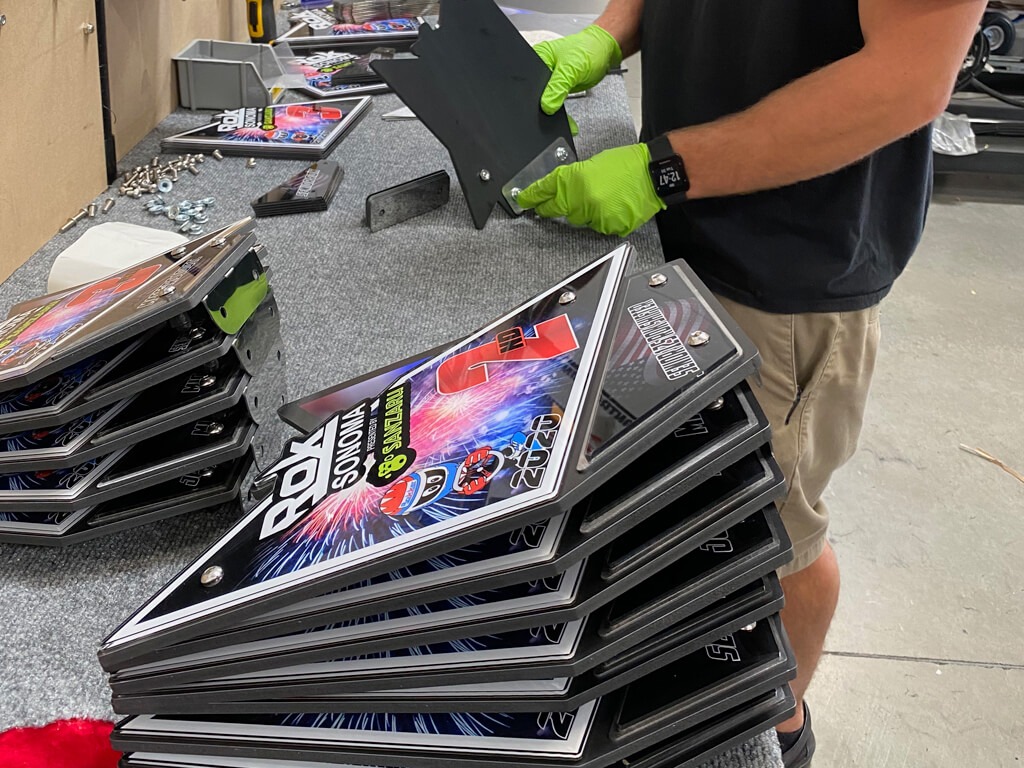
UV printing uses a flatbed printer to deposit ink directly onto the surface of an award. What makes it different from standard inkjet printing is the curing process—as the ink is laid down, UV lights instantly cure (harden) it, bonding it to the surface. This produces a durable, vibrant print that resists smearing and holds its color well.

The resolution achievable with UV printing is high enough to reproduce photographic images, gradient color fills, complex logos with multiple shades, and fine details that would be difficult or impossible to engrave. Because it’s a printing process rather than a removal process, UV printing sits on top of the material surface rather than into it.

UV printed awards are most commonly seen on acrylic, but the method works on a range of flat materials including aluminum, glass, wood, and foam board. It’s also the method of choice for printing onto pre-cut award shapes and panels.

When UV Printing Is Preferred Over Engraving

The clearest case for UV printing is color. Laser engraving produces monochromatic results—the engraved area is either a frosted, dark, or bright contrast against the base material, depending on what’s being engraved. UV printing delivers full color with no restrictions.

If your award design includes a multicolor company logo, a sponsor graphic, a detailed crest, or a photographic image, UV printing is the right tool for the job. Engraving simply cannot reproduce those elements with the same fidelity.

UV printing is also the right choice when color branding is critical—such as corporate awards that need to match specific Pantone values or branded event trophies where consistency across multiple pieces matters. For awards in this category, acrylic plate awards showcase how UV printing can deliver sharp, full-color customization on modern award formats.

Sandblasting: Precision Engraving for Glass and Crystal Awards

How Sandblasting Creates Frosted Designs on Glass Awards

Sandblasting—also called abrasive blasting—works by directing fine particles (typically aluminum oxide or silicon carbide) at high pressure through a stencil or resist film applied to the award surface. The exposed areas of the surface are abraded by the particles, creating a frosted, matte texture. The covered areas remain polished and smooth.

The stencil controls exactly which areas are carved. For simple text and logos, a vinyl resist film is cut to the shape of the design and applied to the glass before blasting begins. The contrast between the frosted carved area and the polished surrounding glass creates the distinctive look associated with glass trophies and crystal plaques.

The depth of the engraving can be increased with multiple passes or extended blasting time, which allows for multi-stage designs with dimensional depth—a technique sometimes called deep carved or stage engraving.

Why Sandblasting Is Used for Premium Recognition Awards

Sandblasting creates a physical texture that laser engraving on glass cannot fully replicate. The frosted finish has a tactile quality—you can feel the design when you run your finger across it—which contributes to the premium, handcrafted feel that glass and crystal recognition awards are known for.

This is why sandblasting is closely associated with high-end corporate recognition programs, executive awards, and lifetime achievement pieces. The process takes more time and skill than laser engraving, which is reflected in the production cost—but the result is a piece that communicates genuine quality.

For organizations ordering corporate recognition awards intended to mark significant milestones, sandblasted glass and crystal pieces remain the standard for prestige.

Chemical Etching: Industrial Precision for Metal Awards

How Chemical Etching Produces Detailed Metal Graphics

Chemical etching—also called photo etching or acid etching—removes metal by exposing it to a controlled chemical solution. The process begins by coating the metal with a photosensitive resist layer, which is then exposed to UV light through a film positive of the artwork. The UV light hardens the resist in the areas corresponding to the design, while the unexposed areas remain soft and wash away during development. The metal is then submerged in an etching solution, which dissolves the unprotected metal—leaving behind a precise recessed design.

The accuracy of chemical etching is exceptional. Because the artwork is transferred photographically, extremely fine lines, micro text, and intricate patterns can be reproduced with accuracy that mechanical engraving cannot match. The depth of the etch is controlled by timing and the concentration of the chemical solution.

When Etching Is Preferred Over Traditional Engraving

Chemical etching is the right choice when a design has complexity beyond what a laser can practically produce on metal. This includes fine heraldic artwork, detailed architectural drawings, intricate logos with very thin line weights, or awards requiring consistent etched depth across a large surface area.

It’s also commonly used for etched metal plaques that need to be produced at scale, such as commemorative plaques for buildings, memorial tablets, or industrial recognition plates where precision and longevity are both critical. Unlike laser engraving, the etching process does not generate heat, which means there’s no risk of warping thin metal plates or creating heat-affected zones around fine details.

For designs that demand the highest level of detail on metal, chemical etching is often the most reliable production method available.

Comparing Engraving, Printing, and Etching for Custom Awards

Durability: Which Decoration Method Lasts the Longest

All four methods can produce durable results, but they don’t perform equally across all conditions.

Laser engraving and sandblasting are permanent by definition—once material is removed, the mark cannot be undone or worn away through normal use. These methods are the safest choice for awards intended to last decades. Chemical etching on metal is similarly permanent, and etched metal plaques are regularly found in good condition after fifty or more years of display.

UV printing is durable under standard indoor conditions, but it sits on the surface rather than into it. Heavy abrasion, prolonged UV exposure, or harsh cleaning products can degrade the print over time. For awards displayed indoors and handled occasionally, this is rarely a practical concern—but it’s worth factoring in for outdoor installations or awards that will be handled daily.

Appearance: Color, Texture, and Visual Impact

The visual outcome of each method is distinct. Laser engraving produces clean, precise marks with a contrast between the engraved area and the base material—elegant and legible, but limited to the colors inherent in the material. Sandblasting creates a frosted, dimensional finish with real depth and texture. UV printing delivers the broadest color range, capable of reproducing photography and complex graphics. Chemical etching sits between engraving and printing in terms of appearance—precise and permanent, with a recessed quality that catches light well.

For engraved vs printed awards, the decision usually comes down to whether the design requires color. If it does, UV printing is the answer. If permanence and a traditional appearance are the priority, engraving or etching will serve better.

Production Speed and Cost Differences

Laser engraving is the fastest method for individual personalization—a typical plaque can be engraved in under a minute once the file is set up. This makes it cost-effective for both small runs and large orders. UV printing setup is also relatively fast, and the per-unit cost is competitive for color work.

Sandblasting requires more hands-on time, particularly for complex designs requiring multiple stages. Chemical etching involves more steps in the production process, which typically makes it the most time-intensive and expensive option. Both are better suited to projects where quality justifies the production time.

Choosing the Right Decoration Method for Your Award Design

Matching Graphics, Materials, and Award Styles

The simplest way to match a decoration method to an award is to start with the material and then consider the artwork.

Glass and crystal awards are sandblasted. Acrylic awards are laser engraved for text-based designs or UV printed for full-color graphics. Metal plaques are laser engraved for standard text and logo work, or chemically etched when the design requires exceptional detail. Wooden awards are almost always laser engraved.

From there, the artwork determines the final choice. Text-only designs work well with any engraving method. Multicolor logos or graphics need UV printing. Highly detailed illustrations or fine-line artwork on metal point toward chemical etching.

Exploring the range of options across acrylic plate awards, engraved plaques, and corporate recognition awards gives a clear sense of how these methods look on finished pieces.

Common Scenarios Where Each Method Works Best

Corporate recognition programs typically use laser engraved plaques for name-based awards, sandblasted glass for executive recognition, and UV printed acrylic for branded event awards with full-color sponsor logos.

Academic achievement awards are almost universally laser engraved—text precision and permanence are the priority, and the designs are usually text-heavy with minimal graphic complexity.

Sporting and racing trophies often mix methods: laser engraved nameplates on traditional cup trophies, UV printed acrylic risers for modern designs, and occasionally sandblasted glass for high-level championship awards.

Employee milestone awards for long-service recognition tend to use higher-end methods—sandblasted crystal or chemically etched metal—because the award is meant to communicate significance and lasting value.

Event trophies for galas, fundraisers, and recognition dinners frequently use UV printing on acrylic, since these pieces often need to incorporate event branding, sponsor logos, and full-color artwork within a tight production timeline.

Understanding the Method Behind the Award

The decoration method used on a custom award shapes everything about the finished piece—how it looks, how long it lasts, and how well it represents the achievement it’s meant to mark. Laser engraving, UV printing, sandblasting, and chemical etching each have specific strengths, and professional award manufacturers select between them based on the material, the artwork, and the intended result.

For most buyers, the clearest starting points are these: choose laser engraving for permanent text-based personalization on plaques and acrylic; choose UV printing when color and complex graphics are required; choose sandblasting for glass and crystal premium pieces; and choose chemical etching when fine detail on metal is the priority.

With that framework in place, the decision becomes straightforward—and the finished award will reflect the quality the recognition deserves.


Ready To Get Your Event Awards Started?

Elevate your event with FREE Design & Fast Shipping custom acrylic awards & trophies! Order high-quality, custom designed acrylic plate awards plaques and trophies for sports, racing, and more. Fast shipping, affordable prices.

Learn More
Blog post Image
Blog post Image